


Kamen Geringsing: The Traditional Fashion and Living Heritage of Tenganan Bali
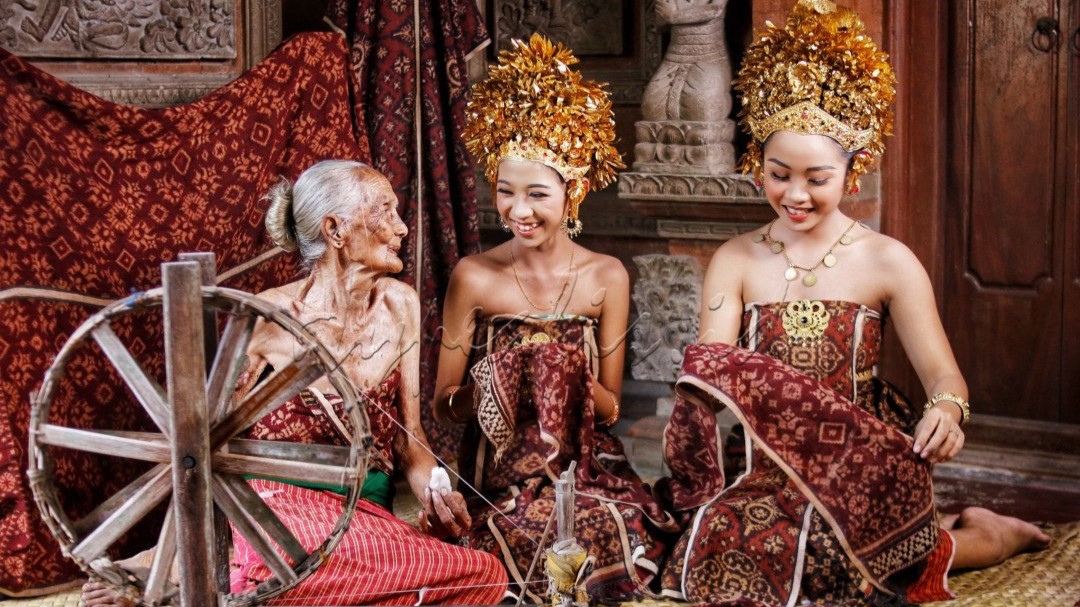
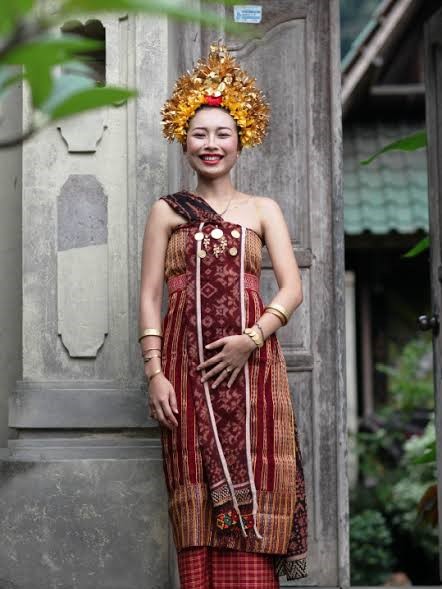
TENGANAN PEGRINGSINGAN, KARANGASEM — In Bali, traditional fashion is rarely just about clothing. The way people dress can reflect their age, social role, ceremony and connection to their community.
In the ancient village of Tenganan Pegringsingan, in Karangasem, this relationship between clothing and culture can be seen through one of Bali’s most remarkable textiles: Geringsing, a handwoven cloth made using the rare double-ikat technique.
For Travelling BALI, discovering Geringsing is not simply a journey into traditional fashion. It is an opportunity to understand how textile, ceremony, identity and community continue to exist together in Bali.
A Village Where Tradition Remains Part of Daily Life
Tenganan Pegringsingan is recognised as one of Bali’s Bali Aga communities, with cultural traditions that have developed their own distinctive character.
The village is especially known for its traditional textiles, ceremonies and customary practices. Unlike fashion that changes from season to season, traditional clothing in Tenganan is closely connected to the village’s ceremonial calendar and social life.
This is why there is no single Tenganan costume that represents every occasion.
Different textiles and ways of wearing them can appear according to the ceremony, age, gender and role of the person wearing them.
What Is Kamen Geringsing?
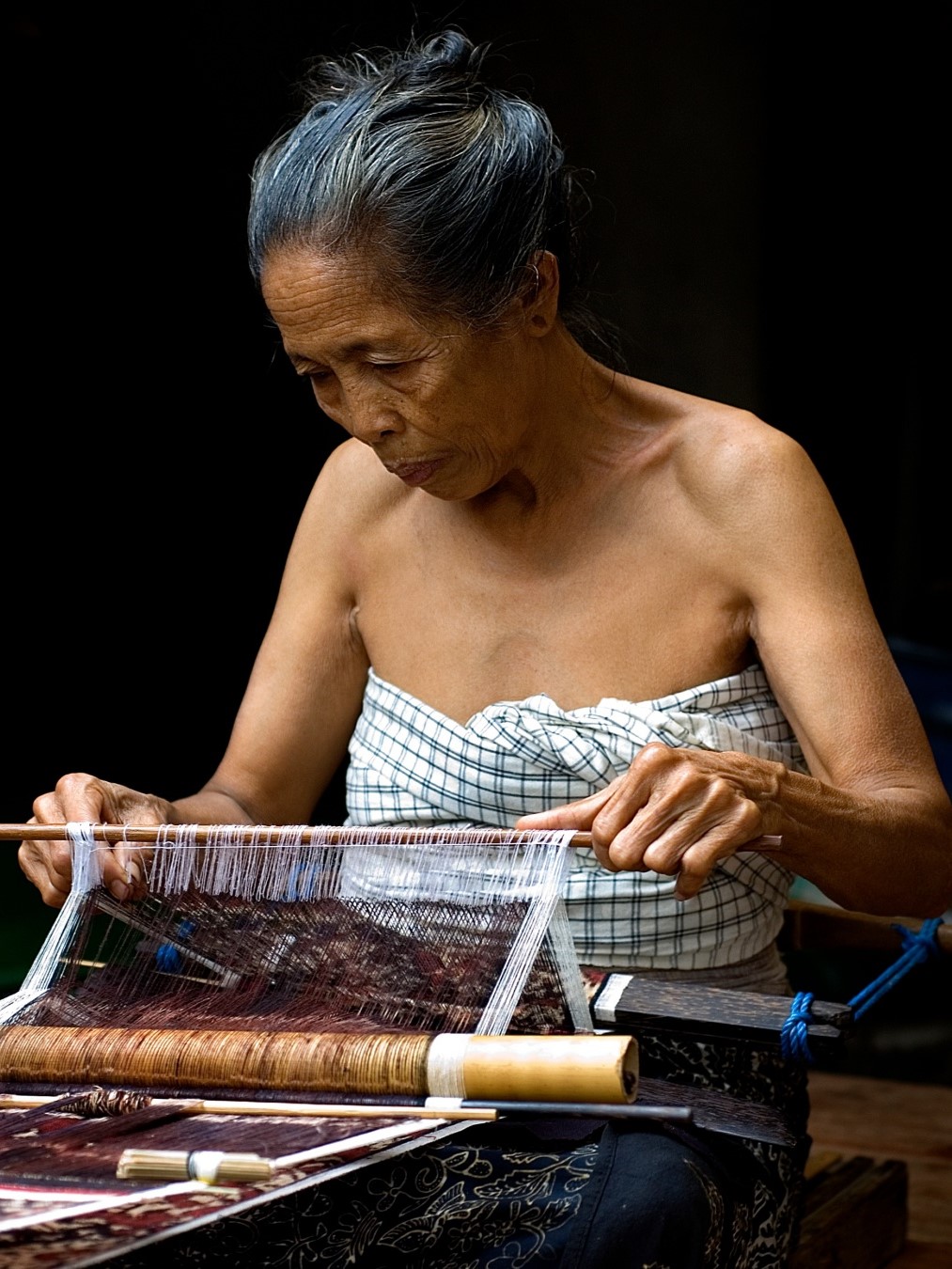
Geringsing is a traditional textile from Tenganan made using double ikat, one of the most technically demanding forms of ikat weaving.
In ordinary ikat production, either the warp or the weft threads are patterned before weaving. In double ikat, both the warp and weft threads are carefully tied and dyed before they are woven together, requiring extremely precise alignment to create the final pattern.
Tenganan is recognised as the only village in Indonesia where this traditional double-ikat textile is produced.
The process is slow and demanding, requiring specialised knowledge that has been passed through generations.
Some Geringsing textiles can take years to complete, depending on their complexity and the preparation involved.
The Meaning Behind the Name
The name Geringsing is commonly explained through the Balinese words gring, associated with illness, and sing, meaning no or not.
The resulting meaning is commonly interpreted as protection from illness or misfortune.
Historically, Geringsing was regarded as a sacred textile and was used in particular ceremonies and rituals. Government cultural documentation notes that the cloth was associated with protection and was traditionally used during certain ceremonial occasions.
This gives the cloth a meaning far beyond fashion.
A Kamen Geringsing can be beautiful to look at, but its significance comes from its relationship with the cultural and spiritual life of Tenganan.
A Language of Motifs
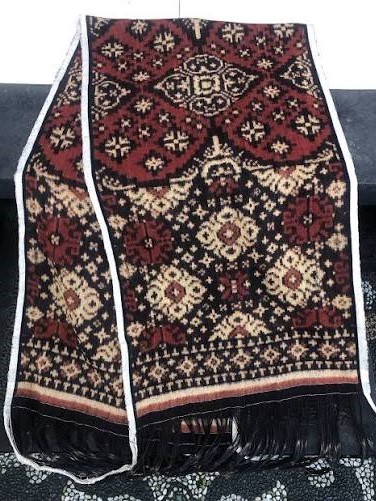
One of the most fascinating aspects of Geringsing is its variety of motifs.
Different sources document different numbers of motifs. Government cultural documentation refers to approximately 24 motifs, while research and museum collections document around 20 or more recognised designs.
Among the better-known motifs are Lubeng, Cemplong, Wayang, Wayang Kebo, Sanan Empeg, Batun Tuwung, Enjekan Siap, Pepare, Teteledan and others.
This variety is important because a motif is not simply a decorative pattern.
The choice of textile can relate to ceremony, age, gender and the role of the wearer. Museum documentation notes that different sizes and patterns of Geringsing are associated with particular ceremonies and with people of different ages and genders.
In other words, Geringsing can be understood as a visual language.
Lubeng and Other Recognisable Designs
Among the motifs frequently mentioned in documentation is Lubeng.
Other recognised designs include Cemplong, Wayang and Sanan Empeg, each contributing to the distinctive visual vocabulary of Tenganan’s textile tradition.
Researchers have also documented a much wider range of designs, including Wayang Puteri, Batun Tuwung, Pepare, Sigading and Enjekan Siap.
This diversity is one reason Geringsing deserves to be studied as a cultural system rather than simply as a traditional fabric.
The Colours of Geringsing
Traditional Geringsing is recognised for its distinctive natural colour palette.
Documentation from Indonesia’s cultural heritage authorities describes the traditional colours as variations of red, black and yellow, produced using natural dye materials.
The Australian Museum similarly notes the use of natural dyes producing deep reds, bluish-black or deep purple tones alongside lighter natural shades.
The colours are therefore not simply selected for contemporary fashion appeal.
They are part of a much older textile tradition in which materials, technique and cultural meaning are closely connected.
The Art of Double Ikat
Creating Geringsing begins long before the cloth reaches the loom.
Threads are prepared and tied according to the intended pattern. Both warp and weft must be dyed in ways that allow the design to align when the two systems are eventually woven together.
This is what makes double ikat so challenging.
The final pattern depends on the accuracy of many stages of preparation.
The Australian Museum describes double ikat as the rarest form of ikat weaving because both warp and weft are dyed and woven to create the design.
The technique is also historically connected to the wider world of double-ikat textiles, including the famous Patola tradition of Gujarat in India.
Geringsing in Ceremonial Life
Geringsing remains closely connected to ceremonial life in Tenganan.
Different textiles can be used for particular ceremonies, and the cloth can form part of ritual dress and offerings.
Museum documentation records Geringsing being used in ceremonial contexts and explains that particular patterns and fabric widths can determine how a cloth is used.
This connection between textile and ceremony helps explain why Geringsing cannot be separated from the community that created it.
It is not simply an object displayed in a museum.
It continues to have a place within cultural life.
When Fashion Tells the Story of a Community
For visitors, it may be tempting to think of traditional Balinese fashion as a collection of beautiful costumes.
Tenganan tells a deeper story.
Here, clothing can become part of the traditional calendar.
The textile worn by a person can communicate something about the occasion, the ceremony and the community.
The same piece of cloth can therefore have a very different significance depending on when and how it is used.
This is what makes traditional fashion in Tenganan so fascinating.
It is not frozen in a display case.
It is connected to people.
A Tradition Under Pressure
The survival of Geringsing also raises an important question: how can traditional knowledge survive when fewer people learn the difficult skills required to produce it?
Indonesia’s cultural heritage authorities have highlighted concerns about the declining number of Geringsing weavers and the need to encourage younger generations to learn the craft.
At the same time, Geringsing has entered the modern commercial and fashion world.
That creates both opportunity and responsibility.
The textile can reach new audiences, but its cultural identity and traditional knowledge need to remain part of the story.
More Than a Textile
Geringsing is one of those rare examples of Balinese heritage where the technique, motif, colour, clothing and ceremony cannot easily be separated.
The cloth tells a story through its pattern.
The weaving tells a story through its technique.
The way it is worn tells a story through ceremony.
And the continued existence of the tradition tells a story about the people of Tenganan.
For travellers, this makes Tenganan more than another destination to add to a Bali itinerary.
It is a place where you can begin to understand that Balinese fashion is not simply about appearance.
It is about identity.
It is about memory.
And it is about the continuation of knowledge from one generation to the next.
Discover Tenganan Through Its Textiles
The next time you explore eastern Bali, consider travelling beyond the familiar beach destinations and spending time in Tenganan Pegringsingan, Karangasem.
Look at the village.
Observe the traditional ceremonies when accessible to visitors.
Notice the textiles.
And if you encounter Geringsing, look beyond its colours and patterns.
Every thread represents knowledge.
Every motif has a story.
And every piece carries a connection to one of Bali’s most distinctive living traditions.
For Travelling BALI, Kamen Geringsing is not simply a story about traditional fashion. It is a story about Bali’s living heritage.
Travelling BALI Editorial Note
Geringsing is a protected and documented element of Indonesia’s traditional cultural heritage. It was officially recognised as Gringsing Tenganan under Indonesia’s national Intangible Cultural Heritage listing in 2015.


