

Gebug Seraya Festival 2026: Where Tradition, Courage and Rain Come Together
There is a side of Bali that cannot be found in beach clubs, luxury resorts or busy tourist streets.
In the eastern part of the island, the village of Seraya in Karangasem preserves a distinctive tradition known as Gebug Ende, also commonly called Gebug Seraya.
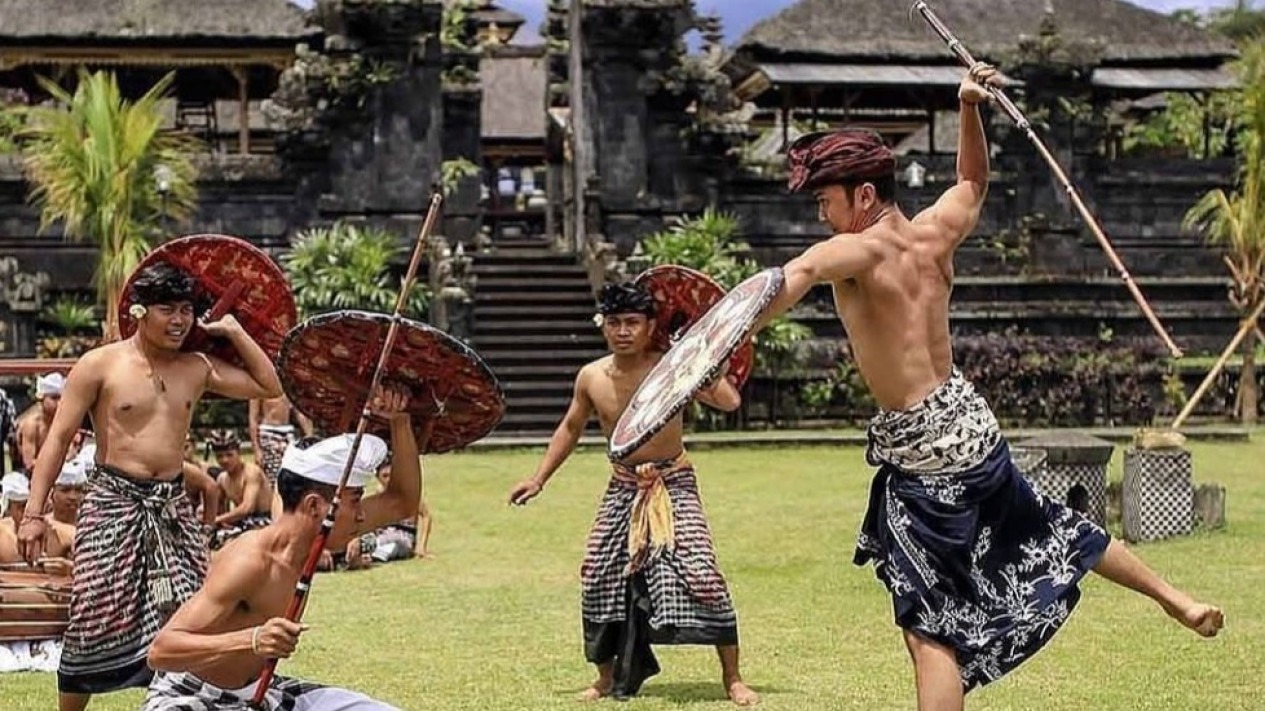
The tradition brings two participants face to face, each carrying a rattan stick and a shield, in a controlled ritual encounter accompanied by traditional music and community ceremonies.
In 2026, visitors will have an opportunity to experience this cultural tradition during the Gebug Seraya Festival, scheduled for 10–12 October 2026 in Seraya, Karangasem.
For travellers interested in discovering a different side of Bali, the festival offers an opportunity to look beyond the island’s better-known tourist destinations and learn about a living tradition from East Bali.
What Is Gebug Seraya?
Gebug Seraya, also known as Gebug Ende, is a traditional practice associated with the community of Seraya in Karangasem.
The word gebug is associated with striking, while ende refers to the shield used by participants.
During the ritual, two participants face one another carrying a rattan stick known as penyalin and a shield known as ende. They strike and defend themselves according to traditional rules, with the encounter overseen by a referee.
Although the scene can appear intense to visitors unfamiliar with the tradition, Gebug Ende is not simply a fight or sporting competition.
It is connected to the spiritual and agricultural life of the Seraya community.
The Karangasem Tourism Office describes Gebug Ende as a tradition that developed among the people of Seraya and has traditionally been associated with a community prayer for rain, particularly during the dry season before the planting period.
A Tradition Connected to Rain

One of the most important things for visitors to understand about Gebug Seraya is its connection with rain and agriculture.
Seraya is located in the eastern part of Bali, an area known for relatively dry conditions compared with some other parts of the island.
Traditionally, Gebug Ende is performed around Sasih Kapat, a period in the Balinese calendar that generally falls around October–November. The ritual is associated with the community’s hope for rainfall and a successful agricultural season.
This relationship between culture, nature and agriculture is an important part of understanding why the tradition continues.
For the community, Gebug Ende is not simply an attraction for visitors. It carries cultural and spiritual meaning that has been passed from generation to generation.
The Rattan Stick and the Ende Shield
The most recognisable elements of Gebug Ende are the two pieces of traditional equipment used by participants.
The Rattan Stick
The participants use a long rattan stick known locally as penyalin.
The stick is used during the controlled exchanges between the two participants.
The Ende Shield
The second participant’s main protection is the ende, a traditional shield made using local materials.
The combination of the rattan stick and shield gives Gebug Ende its distinctive appearance.
For visitors watching for the first time, the movement can look like a combination of traditional combat, ritual and performance.
However, the cultural meaning goes much deeper than the physical exchange itself.
More Than a Fight
One of the easiest mistakes for visitors to make is to view Gebug Seraya simply as a traditional fighting show.
That misses much of its cultural context.
The ritual is connected to ideas of courage, skill, community, gratitude and the relationship between people and nature.
The Bali provincial tourism information describes Gebug Seraya as a sacred tradition associated with prayers for rain and balance in nature.
The Karangasem Tourism Office similarly identifies it as a community tradition and a ritual associated with requesting rain from the Creator.
This is why visitors should approach the event as a cultural and community ritual, rather than treating it like an entertainment performance.
Traditional Music and the Atmosphere of the Village
Gebug Ende does not take place in isolation.
Traditional music and the presence of the local community form an important part of the atmosphere surrounding the ritual.
Sources describing the tradition mention traditional musical accompaniment, including gamelan and other instruments.
The combination of music, participants, villagers and ceremonial elements creates an atmosphere very different from Bali’s commercial cultural shows.
This is one of the reasons the Gebug Seraya Festival can be interesting for travellers who want to experience cultural life in East Bali.


