Denpasar to Ubud – The Road of Art
From the Archives | travelling BALI Vol. XIV, 2015
The road from Denpasar to Ubud is more than a journey from one destination to another. It is a journey through Bali’s living artistic heritage.
Along this approximately 26-kilometre route, travellers encounter villages where traditional skills have been passed from one generation to the next. Stone carvers, silversmiths, goldsmiths, puppet makers, woodcarvers, painters and dancers have long made this part of Bali a remarkable cultural corridor.
This was the story we featured in travelling BALI Vol. XIV in 2015. More than a decade later, the spirit of the journey remains an important part of Bali’s cultural identity.
Batubulan – Where Stone Comes to Life
The journey begins in Batubulan, traditionally known for its stone carving.
Along the road, stone figures and sculptures can be seen outside workshops and homes. Large blocks of stone are transformed by skilled craftsmen into statues, architectural ornaments and traditional Balinese figures.
Batubulan is also closely associated with one of Bali’s best-known traditional performances, the Barong Dance. For visitors interested in Balinese culture, experiencing a traditional dance performance adds another dimension to the journey.
Celuk – The Art of Silver and Gold
From Batubulan, the road continues towards Celuk, a village famous for its jewellery-making tradition.
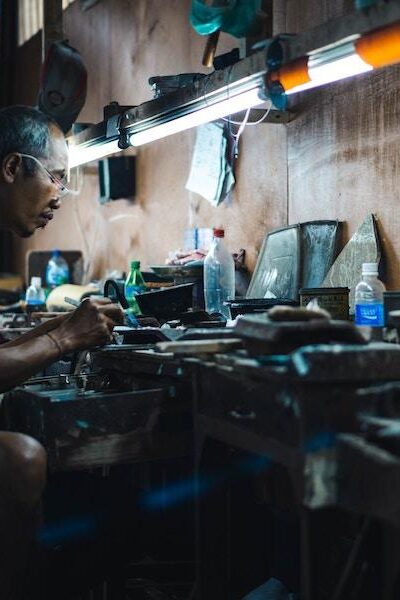
Here, silver and gold are shaped into intricate pieces of jewellery and decorative art. Visitors can often see artisans working with remarkable precision, turning simple materials into detailed creations.
The tradition has deep roots in Balinese craftsmanship, and the skills involved have been handed down through generations.
For travellers who appreciate handmade art, Celuk offers an opportunity to see the creative process rather than simply buying the finished product.
Sukawati – A Market Full of Balinese Art
Next comes Sukawati, one of the traditional art and souvenir centres along the route.
The market has long been known for a wide variety of Balinese handicrafts, including traditional temple umbrellas, known as payung, as well as carved puppets known as wayang.
These puppets are traditionally made from buffalo leather and are connected with the ancient Balinese and Indonesian shadow-puppet tradition.
For visitors, Sukawati is not simply a place to shop. It is a place to discover the variety of objects, techniques and visual traditions that form part of everyday Balinese culture.
Mas – The Village of Woodcarvers
The journey continues to Mas, traditionally recognised as one of Bali’s important woodcarving villages.
Here, wood becomes almost anything the imagination can create.
Traditional religious figures, decorative doors, window frames and playful sculptures have all been part of the village’s artistic tradition. The craftsmanship ranges from highly detailed carving to simpler architectural pieces.
Walking through the workshops and seeing the craftsmen at work provides a glimpse into the patience and skill behind Balinese woodcarving.
Pengosekan and Peliatan – A Tradition of Painting
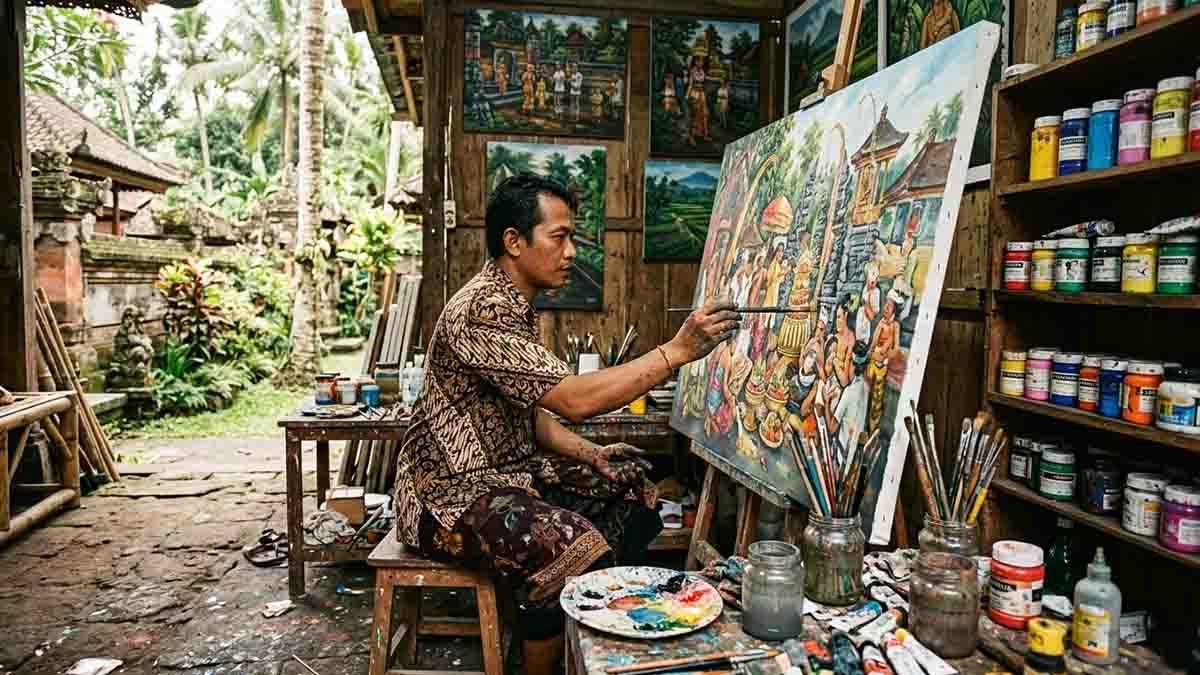
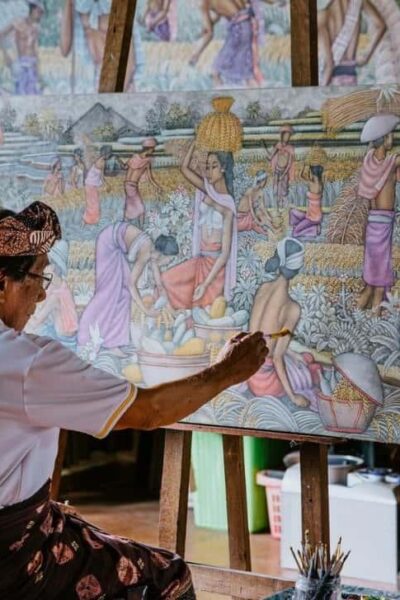
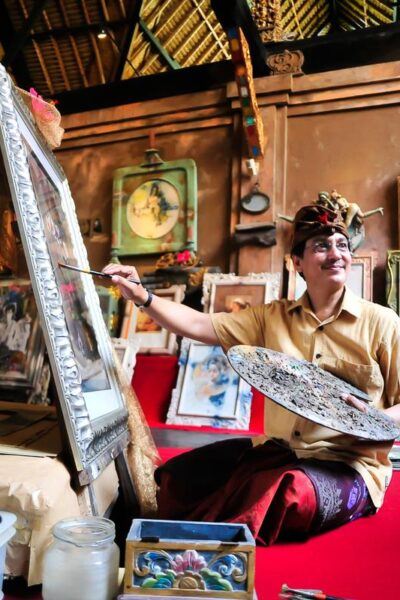
Further towards Ubud, Pengosekan and Peliatan introduce another important chapter in Bali’s artistic history: painting.
These villages have long been associated with Balinese painters and the development of distinctive artistic traditions.
Pengosekan is particularly interesting for its history of community-based art. The Community of Young Artists, established in 1969, was created to help young people from less-privileged families receive an art education and develop their artistic skills.
Art here was not simply decoration. It could become a means of education, livelihood and a way for a community to preserve its cultural identity.
Ubud – Where Art Becomes a Way of Life
The journey finally reaches Ubud, one of Bali’s most celebrated centres of art and culture.
Traditional markets, galleries, workshops and cultural spaces have made Ubud an important destination for anyone wanting to explore Balinese creativity.
Visitors can discover paintings, woodcarvings, jewellery and other forms of traditional and contemporary art. Some workshops also offer opportunities to learn directly from local artists and create something of their own.
Ubud’s appeal, however, goes beyond shopping and galleries. Traditional dances, temples, ceremonies, rice landscapes and village life all contribute to its cultural character.
This is what makes the journey from Denpasar to Ubud so special: the destination is important, but the road itself becomes part of the experience.
More Than a Road
When we first published “Denpasar to Ubud – The Road of Art” in travelling BALI Vol. XIV in 2015, the idea was simple: encourage travellers to look beyond the destination and discover the artistic communities along the way.
That message remains relevant today.
Bali’s art is not confined to museums. It lives in workshops, family compounds, village streets, markets, temples and the hands of artisans who continue traditions passed down through generations.
From the stone carvers of Batubulan to the jewellery makers of Celuk, the artists of Pengosekan and Peliatan, and the galleries and workshops of Ubud, this journey reveals another side of Bali.
The road from Denpasar to Ubud is, indeed, a road of art.
From the Travelling BALI Archives
Originally published in travelling BALI Vol. XIV, 2015.
This article has been revisited by travelling BALI Media as part of our From the Archives series, bringing stories from our print editions to a new generation of travellers while preserving the cultural memories of Bali.
Editorial note: Some places, businesses and conditions mentioned in the original 2015 publication may have changed. This updated digital edition preserves the original story and cultural perspective while presenting it for today’s readers.